Japanese Knives & Blade Towns
A factual field guide to Japan's knife types, blade steels and knife-making regions.
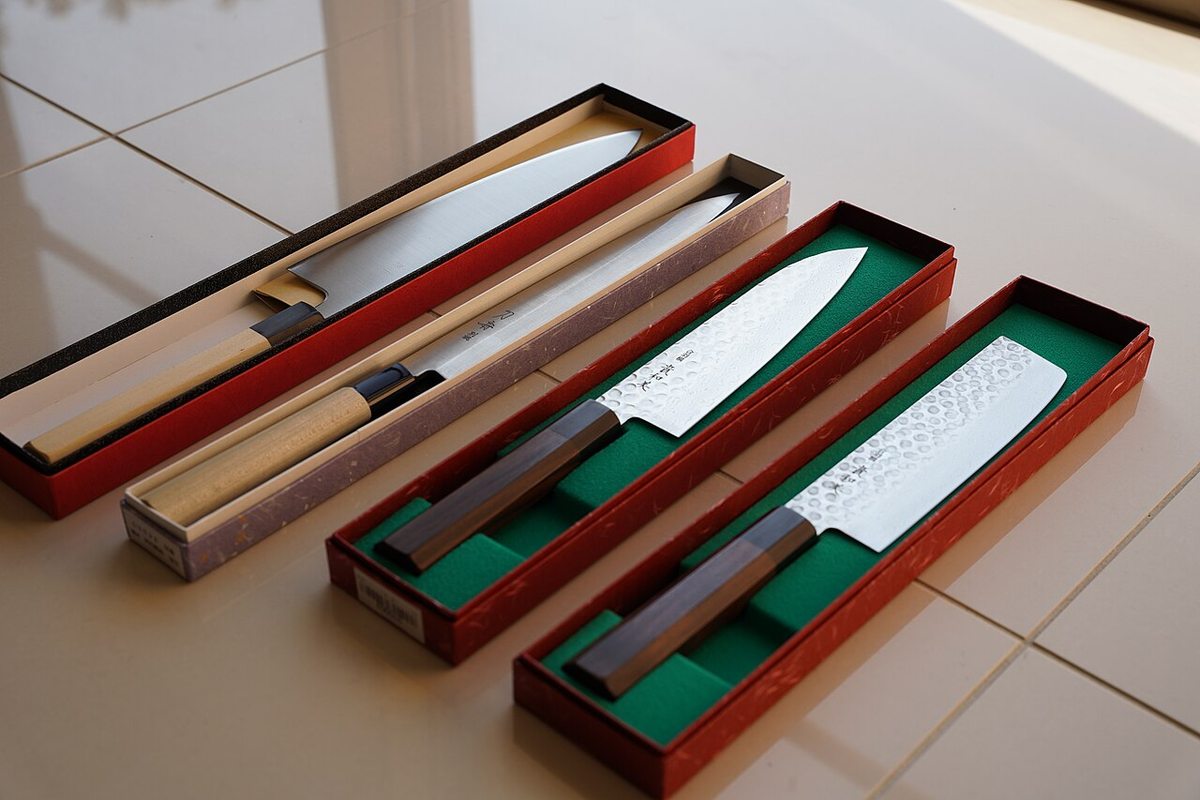
Photo: Gyuto, yanagiba, santoku, and nakiri (version 2, alt angle).jpg, licensed CC BY-SA 4.0, via Wikimedia Commons. Self-hosted copy, resized.
Japanese kitchen knives are a system, not a single product: shapes refined for specific tasks, steels that trade sharpness against upkeep, and regions that organise the work in completely different ways.
This guide records the facts — knife types, steel compositions from maker data, and the real status of each blade region, including which ones actually hold Japan's Traditional Craft designation and which do not. It ranks nothing and reviews nothing; it is an encyclopedia you can check things in.
The collection — 40 records
 Regions
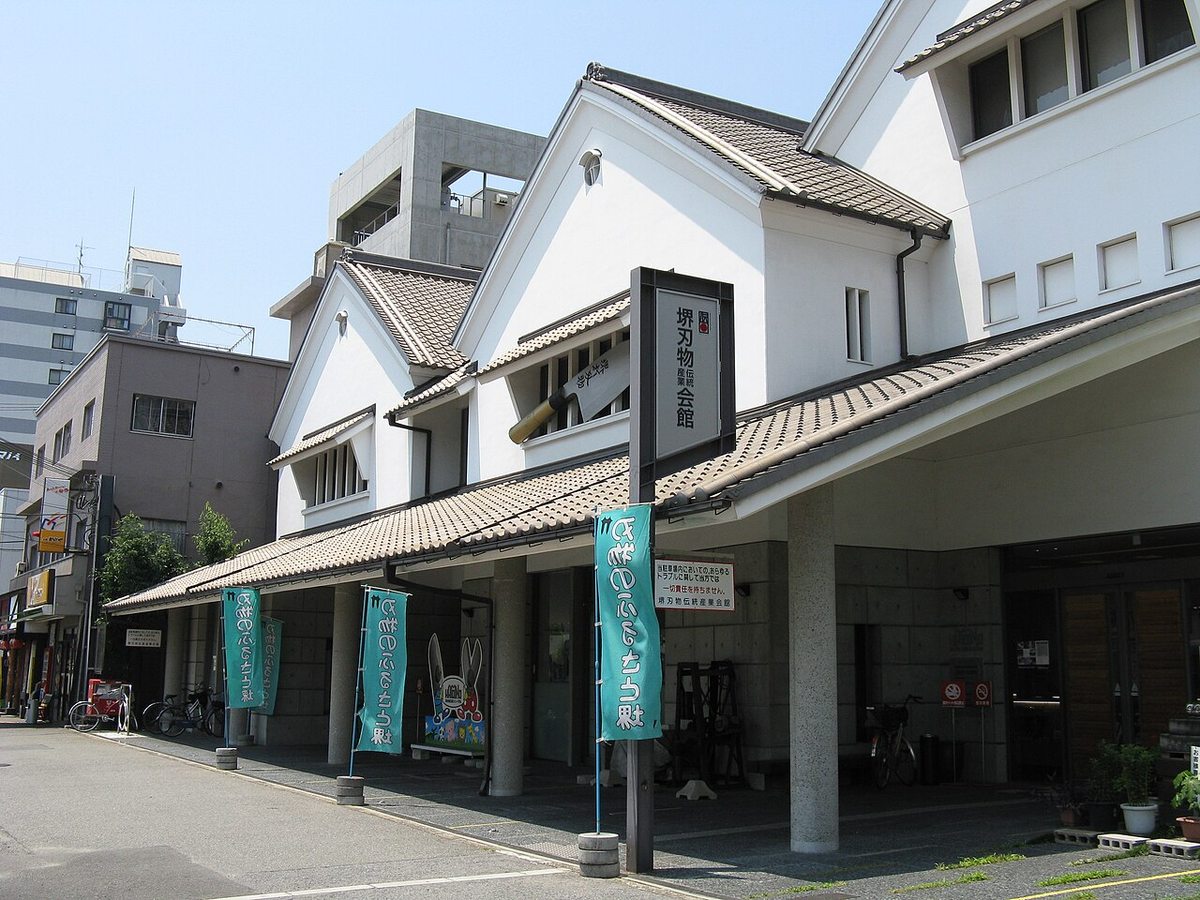
Sakai — the professional chefs' knife city
Osaka's Sakai city is Japan's reference point for hand-forged professional kitchen knives, above all single-be…
 Regions
Echizen — the first blade region to be designated
Echizen in Fukui Prefecture has forged blades for about 700 years and in 1979 became the first blade-producing…
関市 (Seki-shi)RegionsSeki — sword city turned world cutlery exporter
Seki in Gifu Prefecture was one of Japan's great sword towns and is now one of the world's major cutlery produ…
燕三条 (Tsubame-SRegionsTsubame-Sanjo — the twin-city metalworking cluster
Tsubame and Sanjo are neighbouring cities in Niigata that together form Japan's metal tableware and tool clust…
土佐打刃物 (Tosa ucRegionsTosa — free-forged blades from Kochi's mountains
Tosa blades from Kochi Prefecture are made by 'free forging', where each smith hammers blades to shape and to …
 Knife types
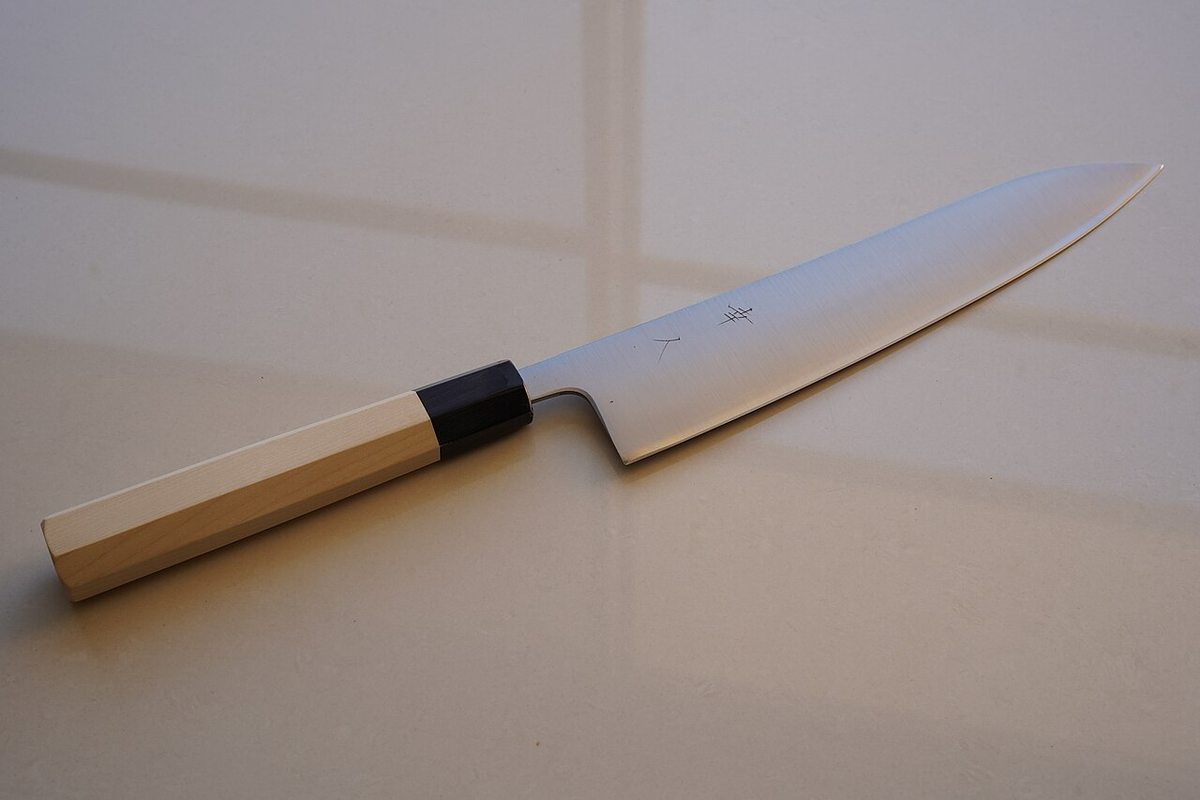
Gyuto — the Japanese chef's knife
The gyuto is Japan's version of the Western chef's knife: a double-bevel all-rounder for meat, fish and vegeta…
 Knife types
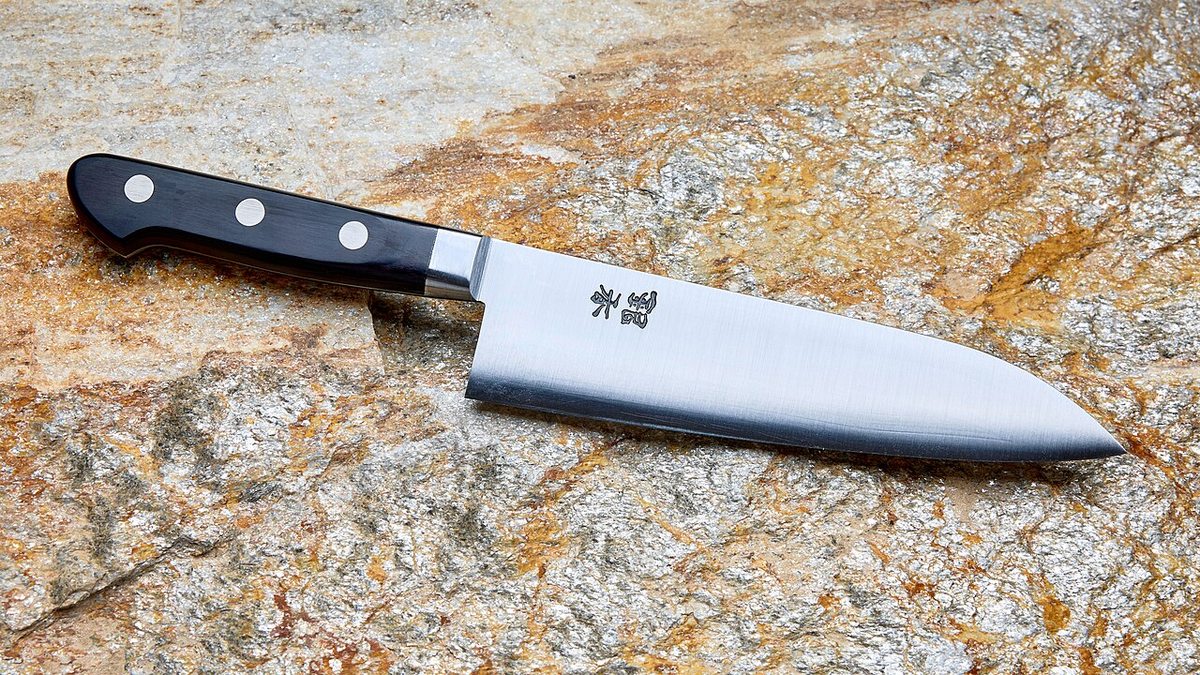
Santoku — the 'three virtues' home knife
The santoku is Japan's home-kitchen all-rounder, typically 165–180 mm, with a wide blade and a sheep's-foot ti…
 Knife types
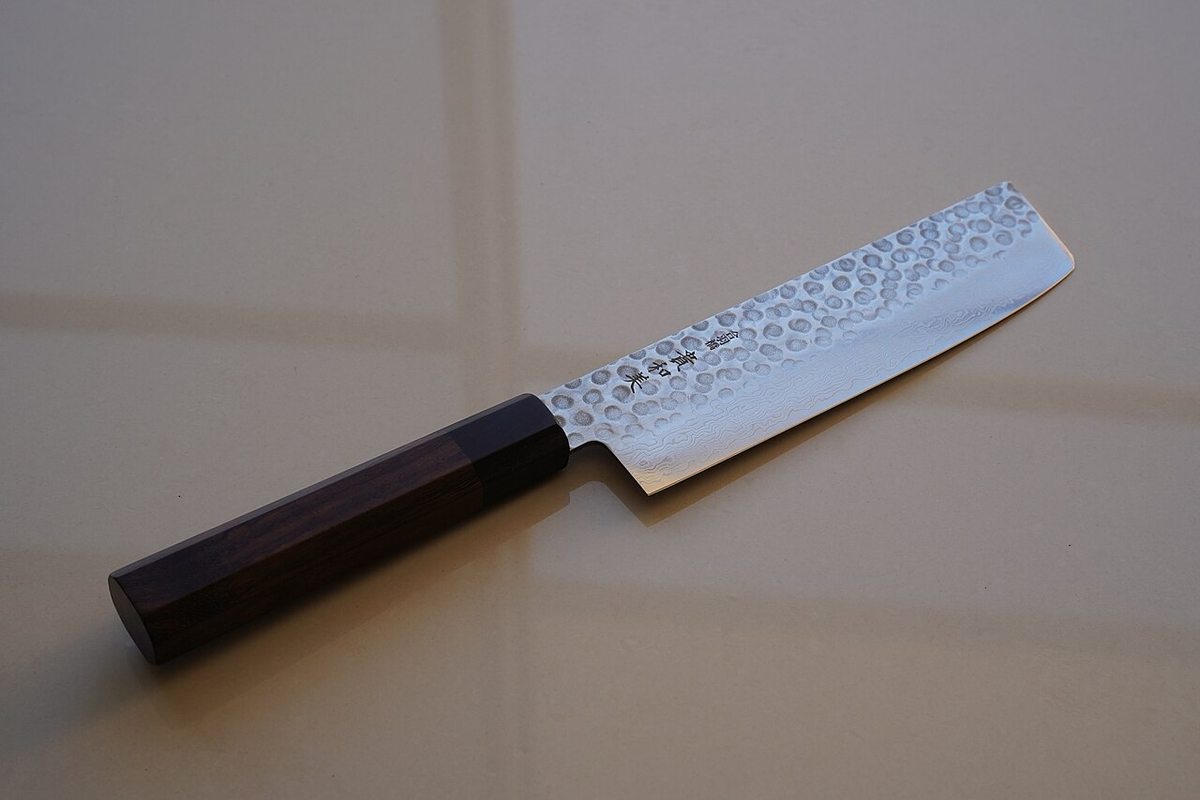
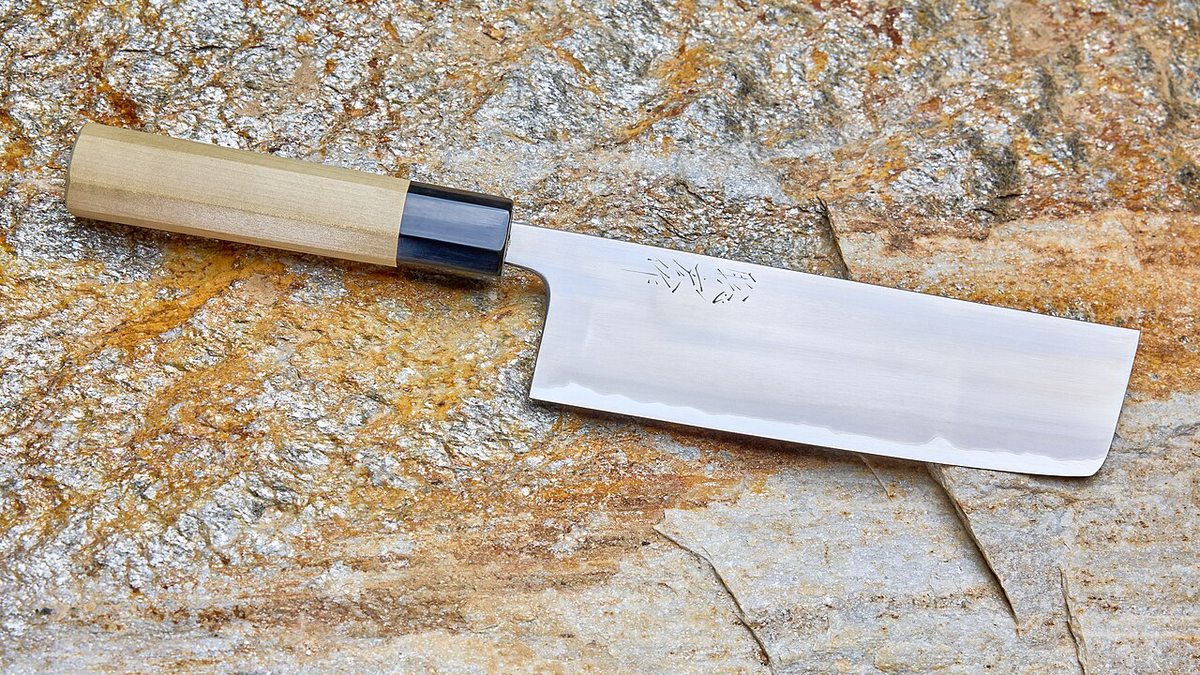
Nakiri — the rectangular vegetable knife
The nakiri is a thin, rectangular double-bevel knife made for vegetables. Its straight edge meets the board al…
ペティナイフ (peti-nKnife typesPetty — the small utility knife
The petty is a small double-bevel utility knife, usually 120–150 mm, used for fruit, garnish and in-hand work.…
 Knife types
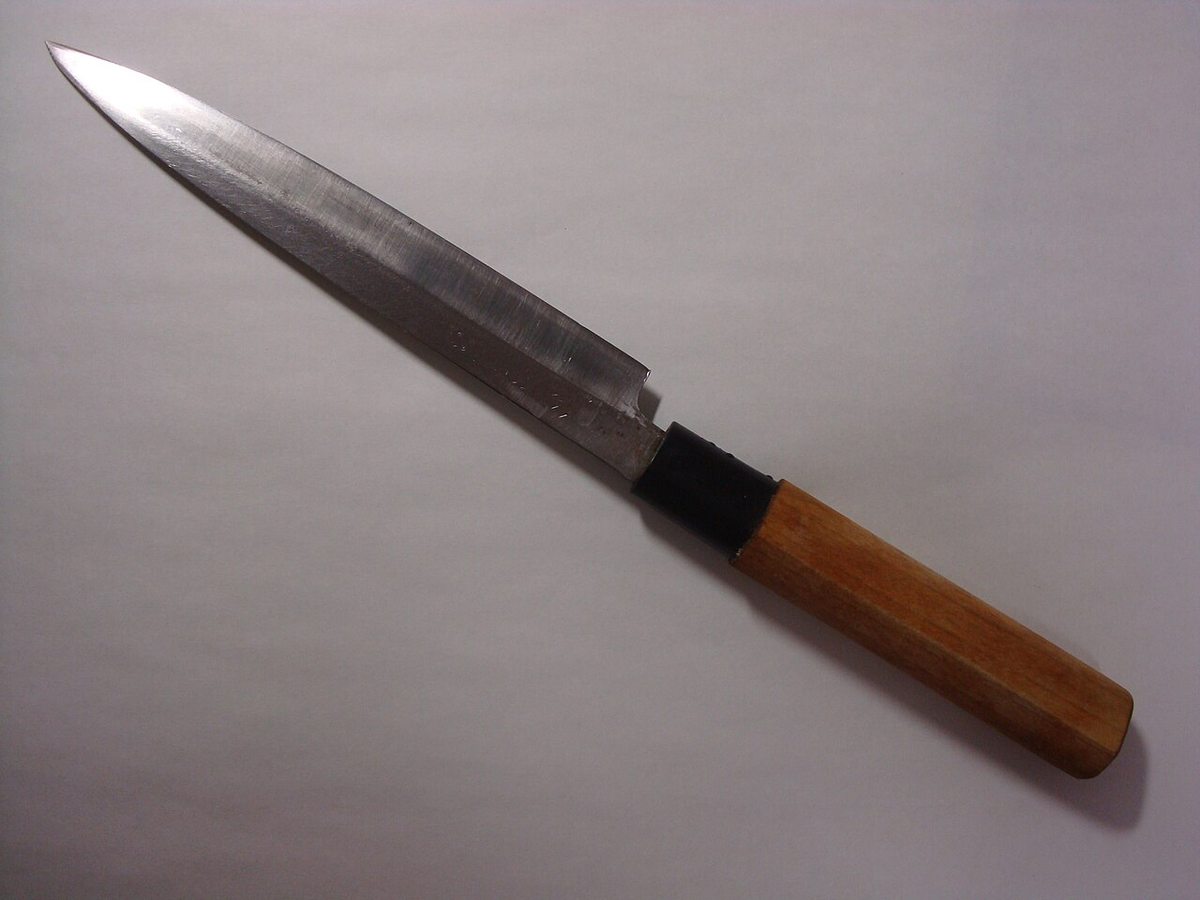
Yanagiba — the sashimi knife
The yanagiba is the long, single-bevel sashimi knife whose name means 'willow blade'. At 240–330 mm it slices …
 Knife types
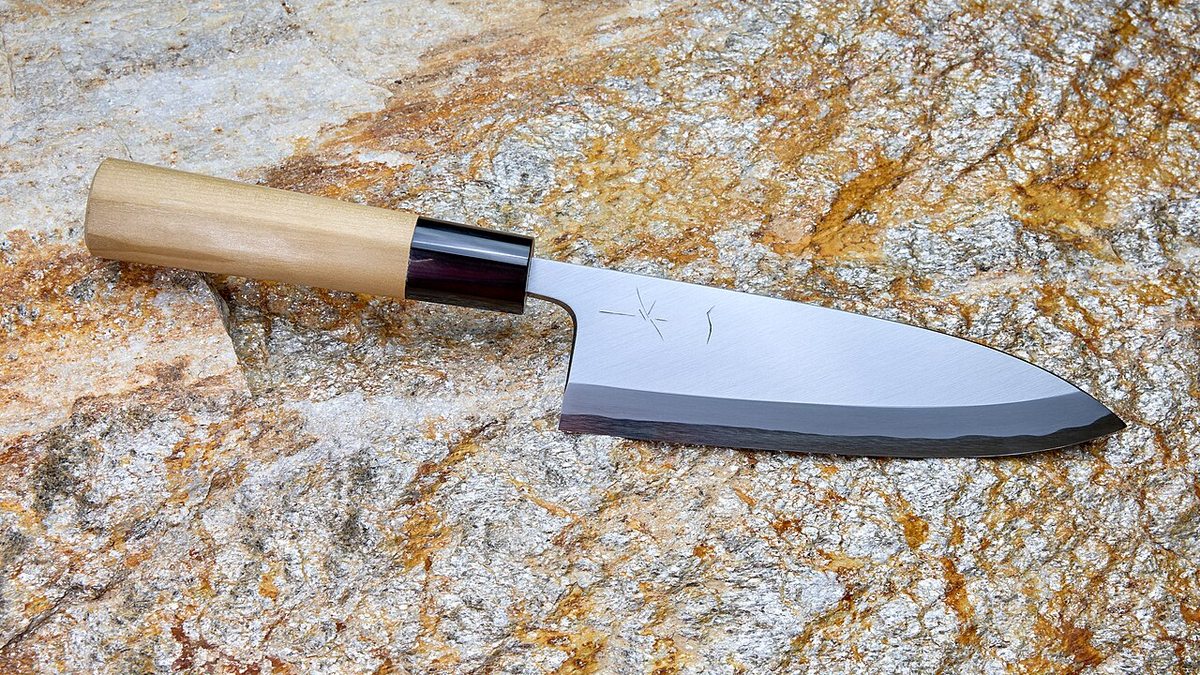
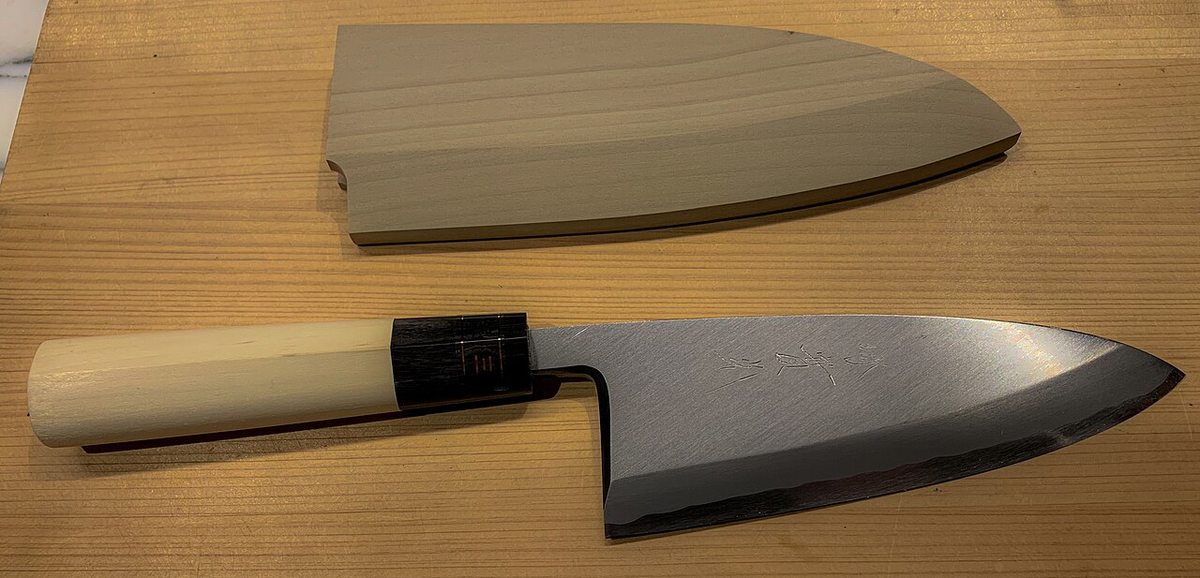
Deba — the fish butchery knife
The deba is a thick, heavy single-bevel knife for breaking down whole fish — removing heads, cutting through b…
 Knife types
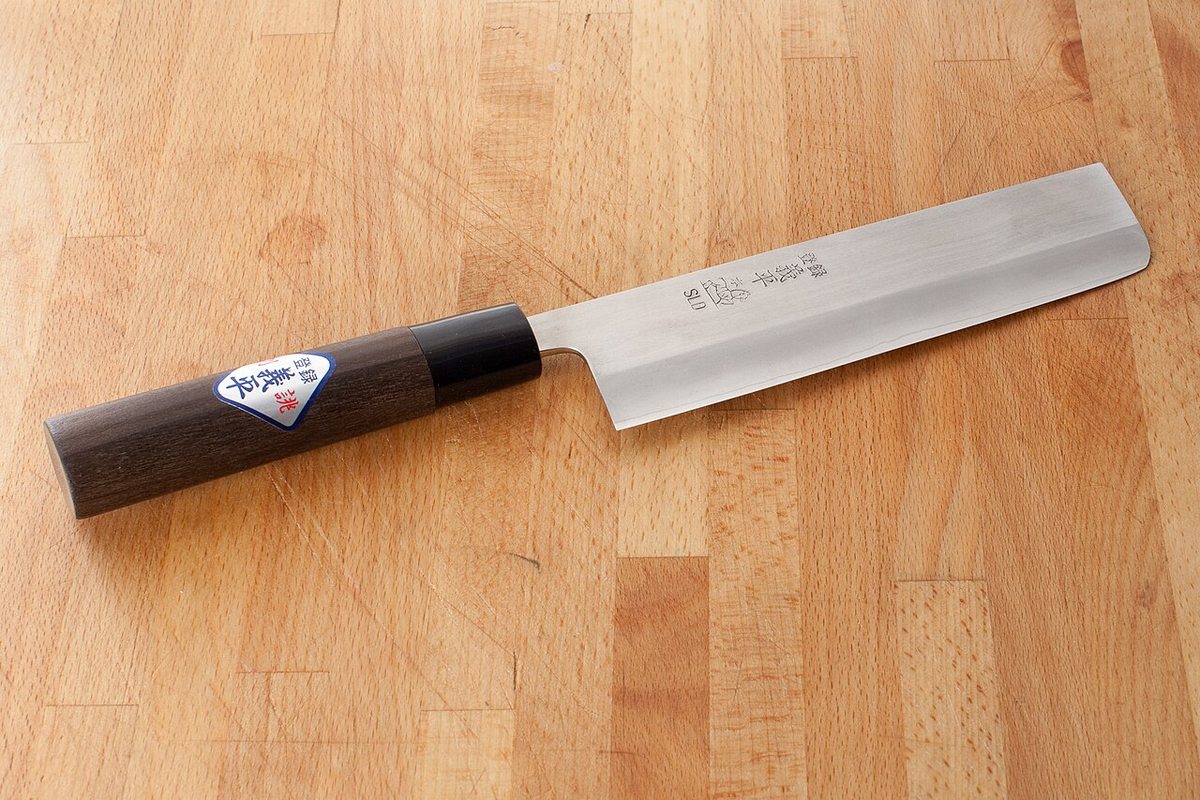
Usuba — the thin vegetable knife of the professionals
The usuba ('thin blade') is a single-bevel vegetable knife for professional Japanese kitchens. It cuts sheets …
 Knife types
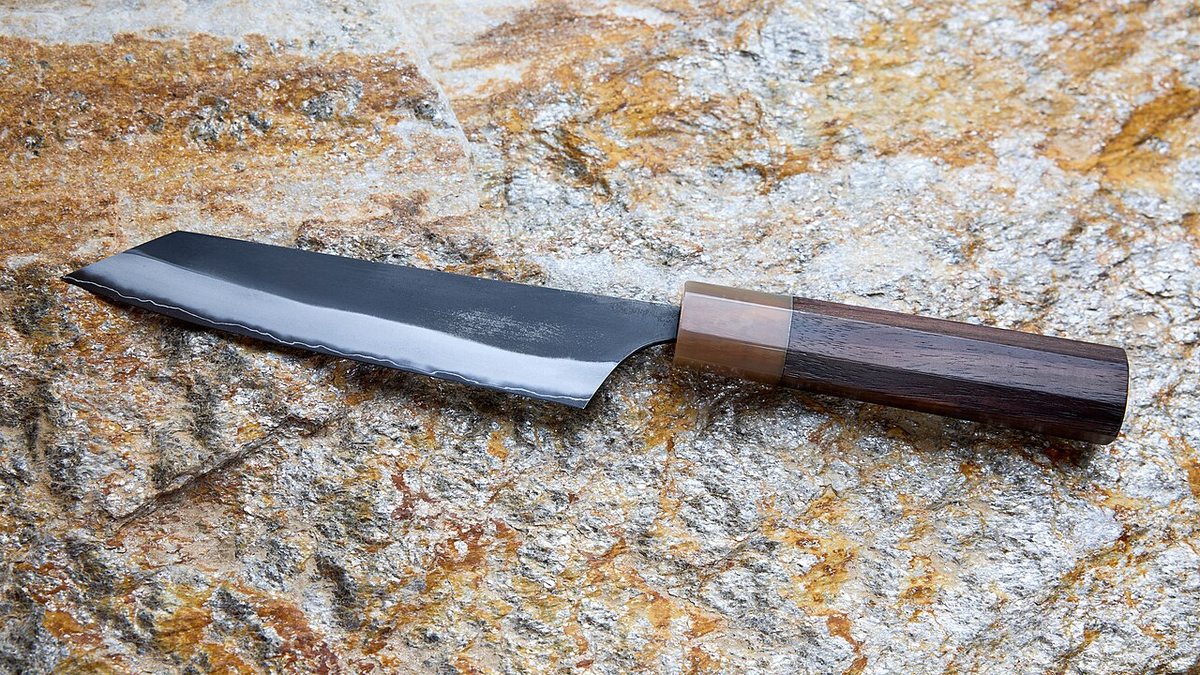
Kiritsuke — the sword-tipped hybrid
The kiritsuke combines a yanagiba's length with an usuba-like flat edge and a distinctive reverse-tanto 'sword…
 Knife types
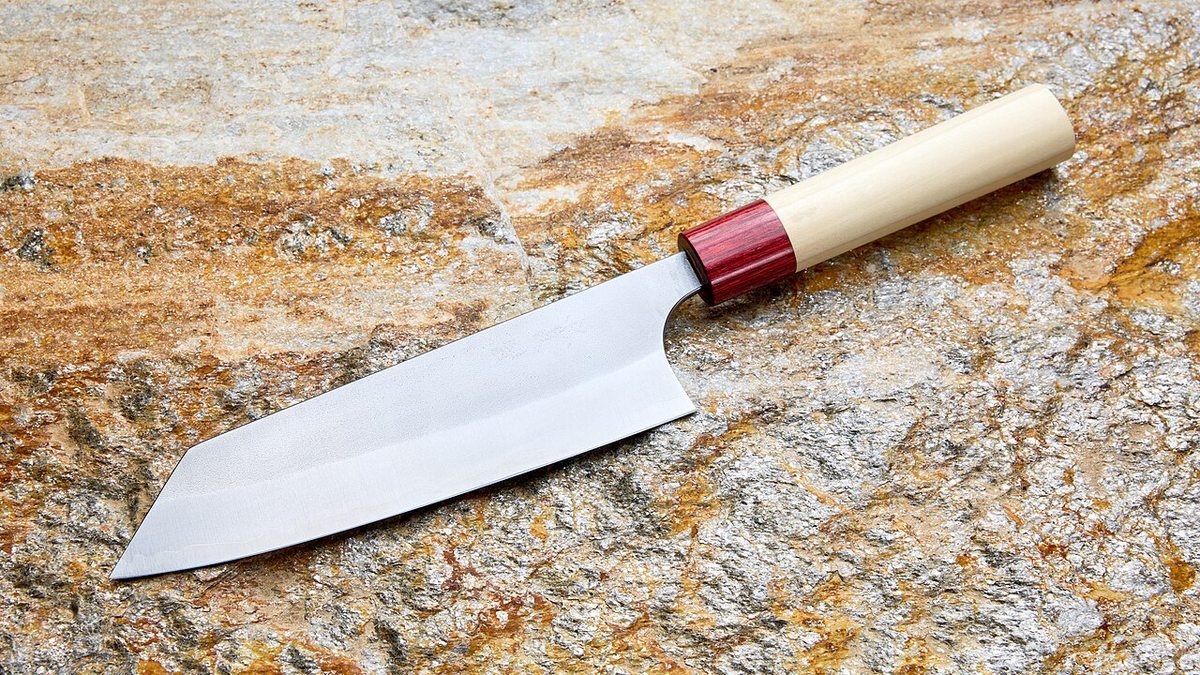
Bunka — the santoku with a sword tip
The bunka is a double-bevel all-rounder like the santoku, but with a reverse-tanto tip that adds precision for…
 Knife types
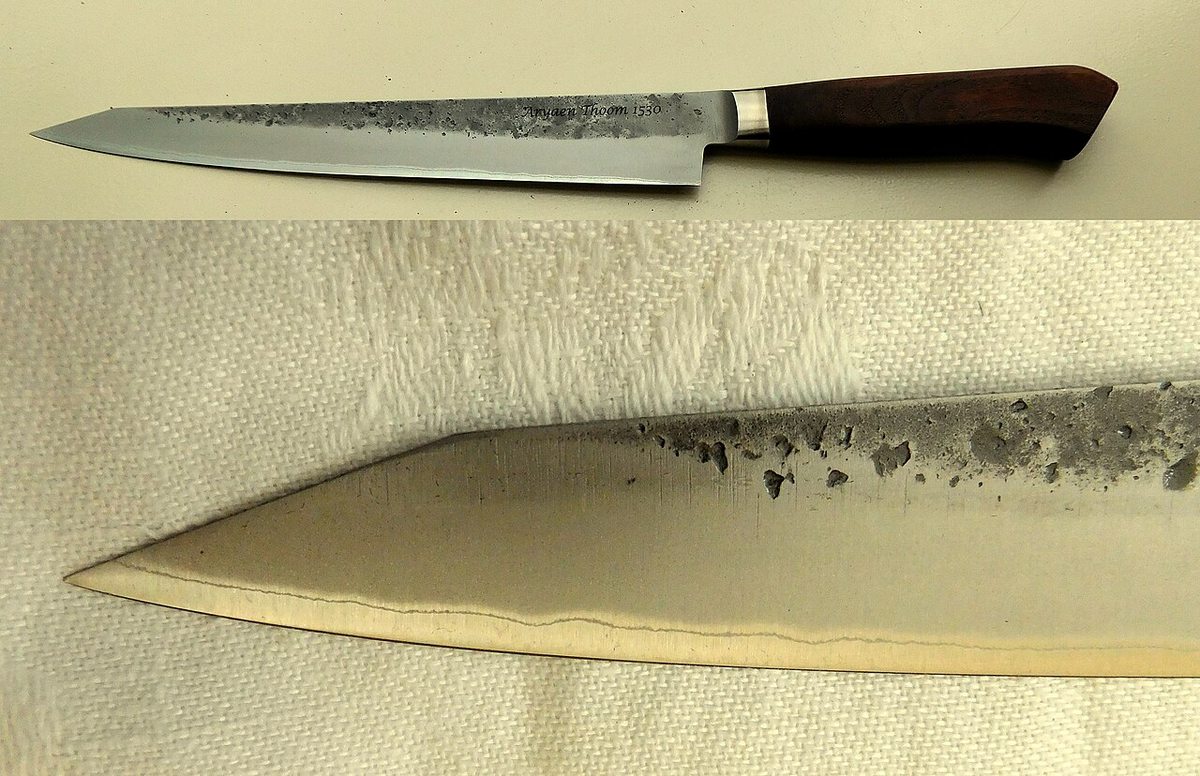
Sujihiki — the long slicing knife
The sujihiki ('muscle puller') is a long, narrow double-bevel slicer, 240–300 mm, for trimming and portioning …
骨スキ (honesuki)Knife typesHonesuki — the poultry boning knife
The honesuki is a stiff, triangular-tipped knife made for breaking down poultry: its thick spine and acute tip…
ガラスキ (garasukiKnife typesGarasuki — the heavy poultry knife
The garasuki is the larger, heavier sibling of the honesuki, around 180 mm, made for breaking down whole birds…
蛸引包丁 (takobikiKnife typesTakobiki — the Kanto sashimi knife
The takobiki is the Kanto (Tokyo) counterpart of the yanagiba: a single-bevel sashimi knife with a squared-off…
ふぐ引包丁 (fuguhikKnife typesFuguhiki — the pufferfish knife
The fuguhiki is a thinner, more flexible relative of the yanagiba, made for slicing pufferfish (fugu) into tra…
剥き物包丁 (mukimonKnife typesMukimono — the carving knife for decorative cuts
The mukimono is a small single-bevel knife for mukimono — the decorative carving of vegetables and fruit into …
味切包丁 (ajikiri-Knife typesAjikiri — the small fish knife
The ajikiri is a small single-bevel knife, about 90–120 mm, named for aji (horse mackerel) and made for prepar…
舟行包丁 (funayukiKnife typesFunayuki — the fishermen's boat knife
The funayuki ('going on the boat') is a compact single-bevel all-rounder that fishermen carried aboard to do e…
小出刃 (ko-deba)Knife typesKo-deba — the small deba
The ko-deba ('small deba') is a compact single-bevel fish knife, about 90–135 mm, for small and medium fish wh…
中華包丁 (chūka-bōKnife typesChuka bocho — the Japanese-made Chinese cleaver
The chuka bocho is the Chinese-pattern cleaver as made in Japan: a tall, rectangular double-bevel blade that c…
 Knife types
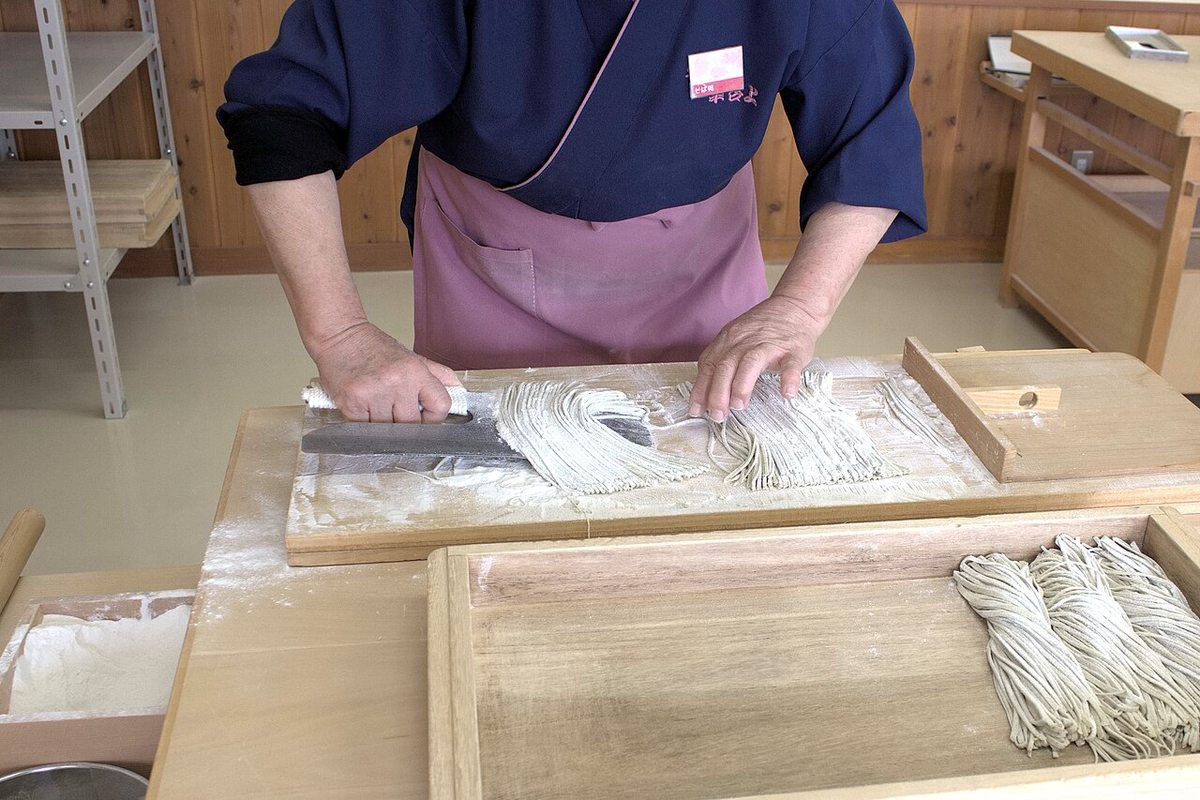
Soba-kiri — the noodle knife
The soba-kiri is a large specialised knife for cutting fresh soba noodles: a wide, straight blade used with a …
 Knife types
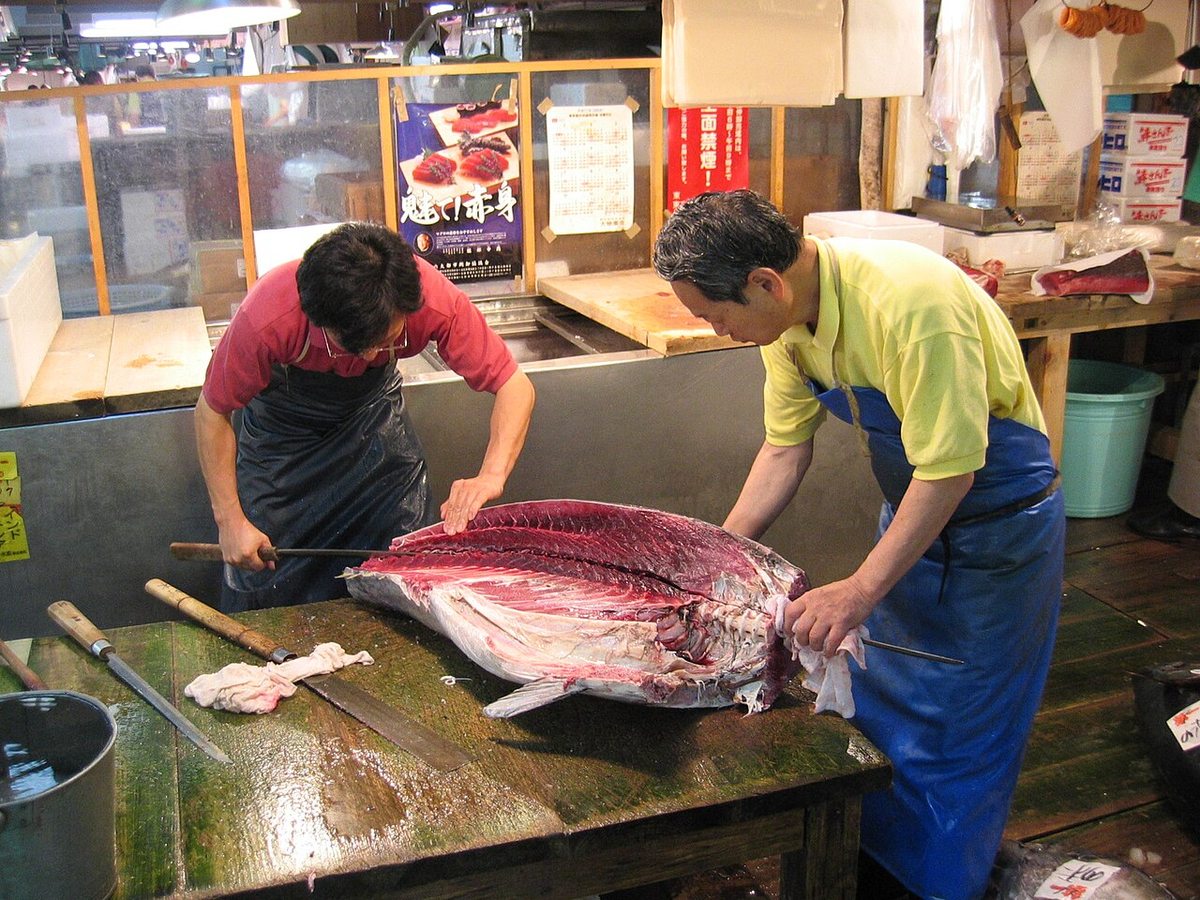
Maguro bocho — the tuna knife
The maguro bocho (oroshi hocho) is an extremely long knife — blade lengths around 400–600 mm and beyond — used…
鰻裂き (unagisakiKnife typesUnagisaki — the eel knife
The unagisaki is a short, stout knife for filleting live eels — pinning, opening and cleaning them on a board.…
鱧切り包丁 (hamokirKnife typesHamokiri — the pike conger knife
The hamokiri is a heavy single-bevel knife for hamo (pike conger), used in the honegiri technique that cuts th…
麺切包丁 (menkiri-Knife typesMenkiri — the udon noodle knife
The menkiri is the noodle knife used for udon (and in some regions for soba): a broad straight-edged blade, wo…
身卸出刃 (mioroshiKnife typesMioroshi deba — the filleting hybrid
The mioroshi deba is a hybrid between deba and yanagiba: narrower and longer than a deba, it both breaks down …
 Steels
Shirogami — white paper steel
Shirogami is Proterial's (formerly Hitachi Metals) purest carbon steel, made at Yasugi from high-purity iron. …
青紙 (aogami) — SteelsAogami — blue paper steel
Aogami starts from shirogami's purity and adds small amounts of chromium and tungsten. The edge lasts longer a…
 Steels
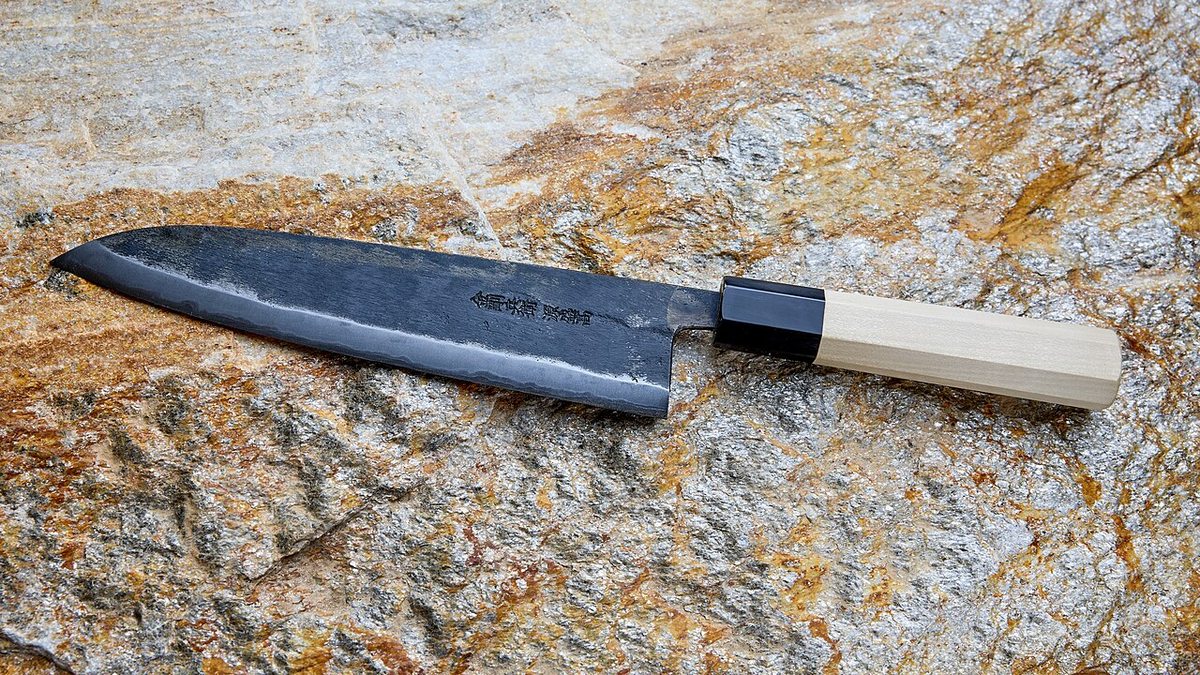
Aogami Super — the top of the Yasugi carbon line
Aogami Super adds molybdenum and vanadium to blue steel, reaching the highest hardness of Proterial's kitchen …
V金10 (V-gold 1SteelsVG-10 — the stainless standard
VG-10 is Takefu Special Steel's stainless blade steel and the core of countless damascus knives. Takefu publis…
V金1 (V-gold 1)SteelsVG-1 — the first V-Gold steel
VG-1 is Takefu Special Steel's original V-Gold stainless steel, the predecessor of VG-10. Summaries of Takefu'…
粉末ハイス鋼 SG2 (SPSteelsSG2 (SPG2) — Takefu's powder stainless
SG2 — Takefu writes it SPG2, 'Super Gold 2' — is a powder-metallurgy stainless steel. Takefu does not publish …
ZDP-189SteelsZDP-189 — the extreme powder steel
ZDP-189 is Proterial's (Hitachi's) powder stainless with about 3% carbon and 20% chromium — figures impossible…
AUS-8SteelsAUS-8 — the everyday stainless
AUS-8 is Aichi Steel's workhorse stainless: about 0.75% carbon, hardening to roughly 58 HRC. It is easy to sha…
AUS-10SteelsAUS-10 — the step up from AUS-8
AUS-10 raises the AUS recipe to about 1.1% carbon, hardening to roughly 59–60 HRC. It keeps the series' easy m…
 Steels
Ginsan — Silver No.3, the carbon-like stainless
Ginsan (Gingami No.3, 'Silver No.3') is Proterial's fine-grained stainless with about 13–14% chromium. It shar…
Scroll inside the frame for the full list. Every card opens its own page.
Comparisons
Gyuto vs Santoku
Two all-rounders, two philosophies: reach and curve against compactness and control.
ComparisonNakiri vs Usuba
Both are rectangular vegetable knives. One is the home cook's double-bevel tool; the other is the professional's single-bevel instrument.
ComparisonYanagiba vs Sujihiki
The sashimi specialist against the double-bevel slicer: same long draw cut, different edge geometry and different home ground.
ComparisonYanagiba vs Takobiki vs Fuguhiki
Three single-bevel sashimi knives: the Kansai standard, the Kanto square-tip, and the thinned specialist for pufferfish.
ComparisonSingle-Bevel vs Double-Bevel
The deepest divide in Japanese knives is not shape but edge geometry. Here is what actually changes.
ComparisonCarbon Steel vs Stainless Steel
Rust or not rust is only the start. Sharpening feel, edge character and upkeep divide the two families.
ComparisonShirogami vs Aogami
Proterial's white and blue paper steels: purity against a measured dose of alloy.
ComparisonVG-10 vs SG2
Takefu's two flagship stainless steels: the balanced standard and the powder-metallurgy step up.
ComparisonSakai vs Seki vs Echizen
Japan's three most cited knife origins are three different kinds of place: a designated craft of divided labour, an industrial export city, and the first-designated forging region.
ComparisonSantoku vs Bunka
Same body plan, different tip: the sheep's-foot against the sword point.
Prices for Japanese knives vary enormously with maker, steel, finish and retailer, and they move over time, so this guide does not attach prices to individual knives or makers.
As a general picture only: mass-produced stainless knives from the industrial regions sit in the lowest price bands; hand-forged knives from designated craft regions, and knives in premium steels such as SG2 and ZDP-189, sit in higher bands; and long single-bevel professional knives (yanagiba, deba) occupy the top of the range because of the handwork in forging and sharpening them. Treat any specific figure you see elsewhere as a snapshot, not a constant.
Disclosure: this guide is published for information. Where a page links to an outside shop in future, that relationship will be disclosed on the page. No maker or retailer has paid for inclusion here.