Guide top › Regions › Sakai — the professional chefs' knife city
Sakai — the professional chefs' knife city
堺打刃物 (Sakai uchi-hamono) — Osaka's Sakai city is Japan's reference point for hand-forged professional kitchen knives, above all single-bevel blades. Its workshops still split the work between separate forging, sharpening and handle-fitting specialists.
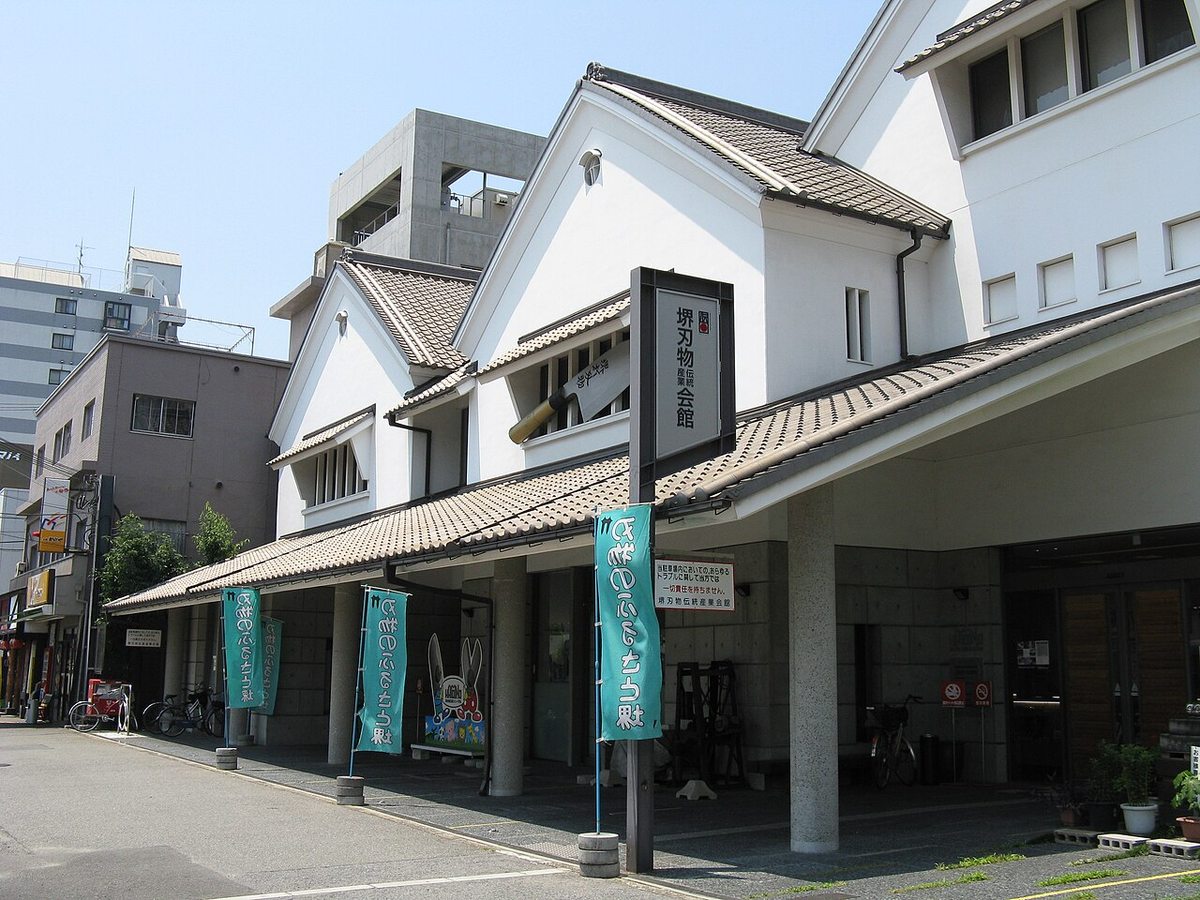
| Record type | Blade region |
|---|---|
| Origin | Sakai, Osaka Prefecture |
| Japanese name | 堺打刃物 (Sakai uchi-hamono) |
| Traditional Craft designation | Designated a Traditional Craft on 5 March 1982 (Minister of Economy, Trade and Industry) |
| How production is organised | Division of labour: forging, sharpening and handle-fitting are separate specialist workshops |
Sakai, in Osaka Prefecture, has made blades since the age of the great kofun tomb mounds, and its tobacco knives were a shogunate monopoly product in the Edo period. Sakai uchi-hamono was designated a Traditional Craft by the Minister of Economy, Trade and Industry on 5 March 1982. The defining feature today is strict division of labour: one workshop forges the blade, another sharpens it, a third fits the handle, and the reputation of each stage rests on its own master craftsmen.
Ask a Japanese sushi chef where a serious knife comes from and the answer is very often Sakai. The city built that reputation not on one famous factory but on a whole district of small workshops, each doing a single stage of the work to an exacting standard.
A designated traditional craft
Sakai uchi-hamono (Sakai forged blades) was designated a Traditional Craft under the national system on 5 March 1982. The designation recognises blades made in and around Sakai City using traditional forging methods, and both 'Sakai uchi-hamono' and 'Sakai hamono' are also registered regional collective trademarks.
The designation matters because it is specific. It covers this one craft in this one place; it is not a general label for Japanese knives, and most of Japan's other blade towns do not hold it.
How the work is divided
Sakai's signature is its division of labour. A smith forges the blade blank, a separate sharpening workshop grinds and finishes the edge, and a handle maker fits the wooden handle. No single workshop does everything.
This system grew up because professional chefs judge a knife almost entirely by its edge. Letting sharpening be its own trade, with its own masters, kept the standard of the final edge exceptionally high — and it is still how most Sakai knives are made.
From tobacco knives to chefs' knives
Metalworking in Sakai is old: the huge kofun burial mounds built around the city in the 5th century needed large numbers of iron tools. In the Edo period Sakai became famous for tobacco knives, used to cut the tobacco leaves introduced from Portugal; the shogunate granted them a monopoly mark, which spread Sakai's name across the country.
As Japanese cuisine professionalised, Sakai's output concentrated on kitchen knives — above all the single-bevel yanagiba, deba and usuba that professional chefs still order from Sakai workshops today.
Read alongside
Sources
- Sakai uchi-hamono — Wikipedia (Japanese) — History, designation and workshop structure of Sakai forged blades
- Sakai uchi-hamono — Sakai City official page — Designation date (5 March 1982) and regional trademark registration, as published by Sakai City
Record source: Wikipedia (Japanese). Text is original to this guide, written from the cited sources. Wikipedia material is used under CC BY-SA. Official, association and maker pages were used for facts and figures only; no text or photographs were copied from them.