Guide top › Steels › Ginsan — Silver No.3, the carbon-like stainless
Ginsan — Silver No.3, the carbon-like stainless
銀紙3号 (gin-gami 3-gō) — Ginsan (Gingami No.3, 'Silver No.3') is Proterial's fine-grained stainless with about 13–14% chromium. It sharpens with a feel close to carbon steel, which is why traditional makers in Sakai use it for single-bevel knives.
Maker-published figures. Bars show the published value or range for each element.
| Record type | Steel |
|---|---|
| Origin | Proterial (Hitachi Metals), Japan |
| Japanese name | 銀紙3号 (gin-gami 3-gō) — 'Silver No.3' |
| Steel family | Stainless steel (low-alloy, fine grain) |
| Maker | Proterial Ltd. (formerly Hitachi Metals) |
| Composition | Cr about 13–14% (grade data); low-alloy stainless designed for a fine grain |
| Hardness | Finished knives typically about 58–61 HRC, varying by maker |
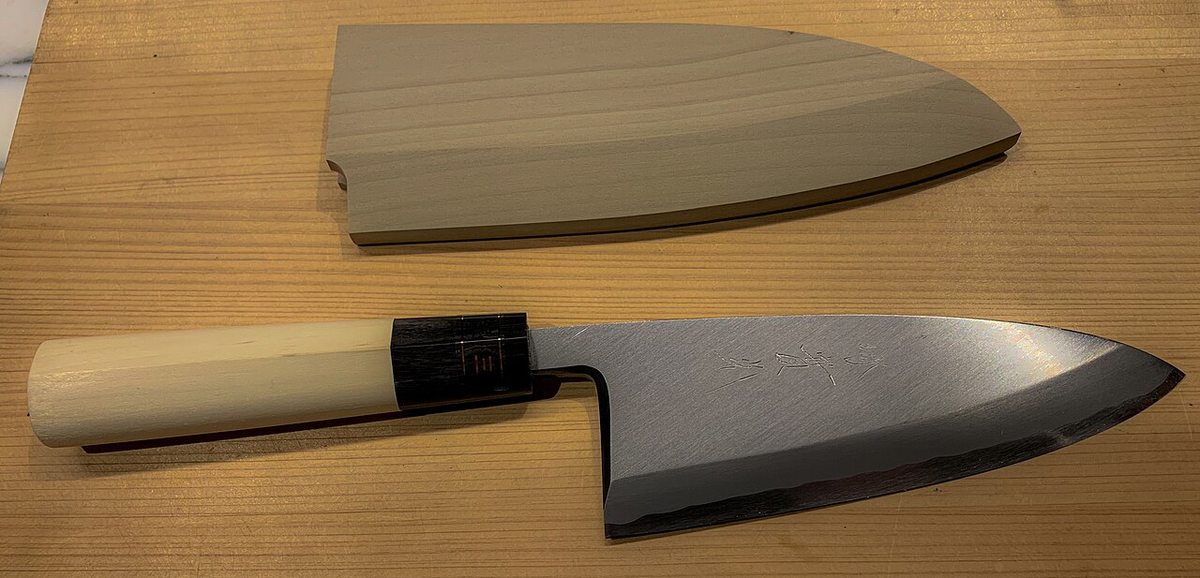
Most stainless steels sharpen with a slippery, stubborn feel on the stone. Ginsan was designed to behave differently: a clean, fine structure that takes a carbon-steel-like edge while resisting rust. Hardness in finished knives is typically about 58–61 HRC. Sakai workshops — Jikko's Ginsan deba in the photograph on this page is one — use it for yanagiba, deba and usuba aimed at chefs who want traditional shapes without carbon-steel upkeep.
Ginsan answers a specific complaint: 'I want a traditional Sakai single-bevel knife, but not the rust.' It is the stainless the traditionalists accept.
Stainless that sharpens like carbon
With chromium held near the stainless threshold (about 13–14%) and a fine, low-alloy structure, Ginsan raises a burr and takes polish much like shirogami, while shrugging off the water and fish juices of a sushi counter.
Its hardness ceiling is lower than VG-10's, so pure edge life is shorter; the bargain is feel and tradition of form, not maximum retention.
Read alongside
Sources
- Steel Guide — Knives From Japan — Specialist steel guide covering VG-1, AUS-8, AUS-10, Ginsan and ZDP-189
Record source: Knives From Japan steel guide. Text is original to this guide, written from the cited sources. Wikipedia material is used under CC BY-SA. Official, association and maker pages were used for facts and figures only; no text or photographs were copied from them.