Guide top › Comparisons › Carbon Steel vs Stainless Steel
Carbon Steel vs Stainless Steel
Rust or not rust is only the start. Sharpening feel, edge character and upkeep divide the two families.
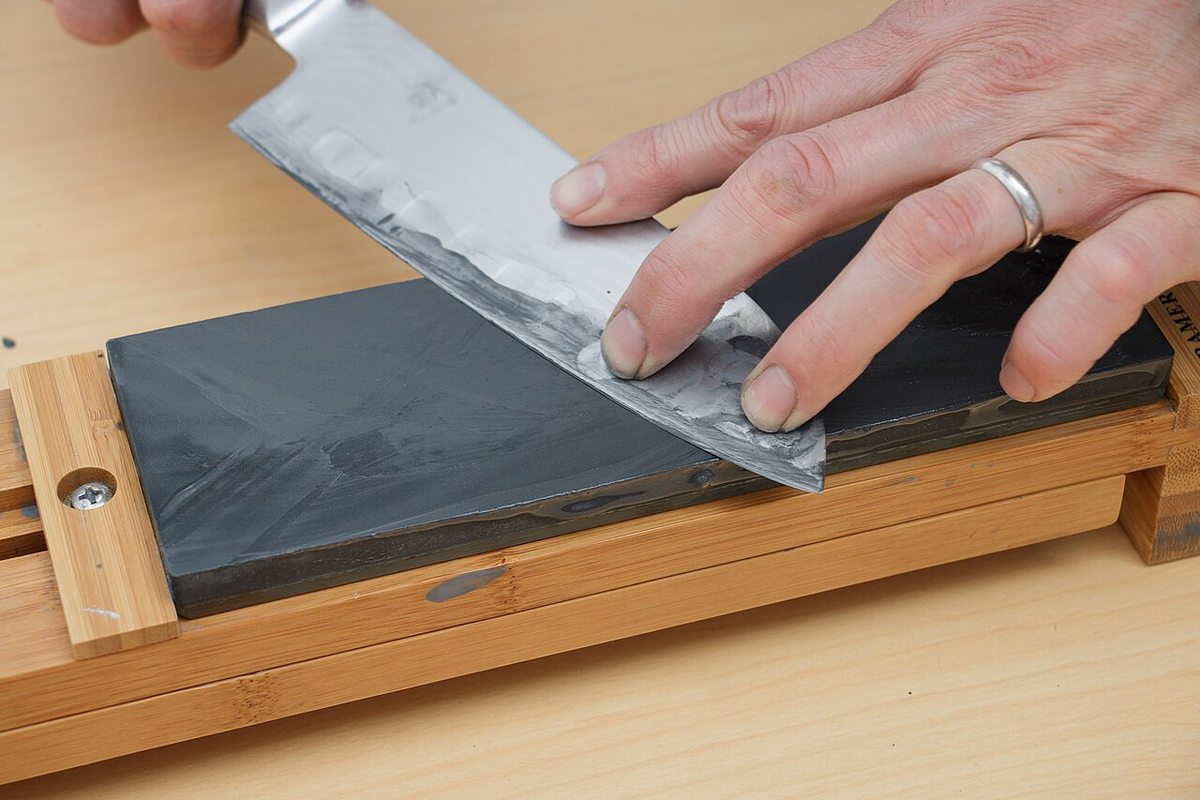
Carbon steels (shirogami, aogami) contain little or no chromium: they rust, they patina, and they must be dried after use. In exchange they sharpen quickly to very fine edges and are the steels of the traditional single-bevel knives.
Stainless steels (VG-10, AUS, Ginsan, SG2, ZDP-189) carry roughly 13% or more chromium and resist rust in normal kitchen use — 'stain-less', not stain-proof. Their sharpening feel varies by grade: Ginsan is designed to feel close to carbon steel, while hard powder steels like ZDP-189 are slow to sharpen.
| Shirogami | VG-10 | |
|---|---|---|
| Rust behaviour | Rusts and patinas; dry after use | Resists rust in normal use |
| Sharpening | Fast, fine edge on water stones | Varies by grade; hard powder steels are slow |
| Traditional single-bevel knives | Standard choice | Available (Ginsan, SG2) but less traditional |
| Upkeep | Oiling for storage; patina management | Wash, dry, store |
| Representative steels | Shirogami, Aogami, Aogami Super | VG-10, SG2, ZDP-189, AUS-8/10, Ginsan |
Which tasks each suits
- Cooks who sharpen happily and cook in a Japanese idiom are well served by carbon steel.
- Shared kitchens, humid climates and low-maintenance preferences point to stainless — with Ginsan as the traditional-feel option.
This comparison states facts drawn from the linked records. It is not a test result and not a ranking.