Guide top › Knife types › Maguro bocho — the tuna knife
Maguro bocho — the tuna knife
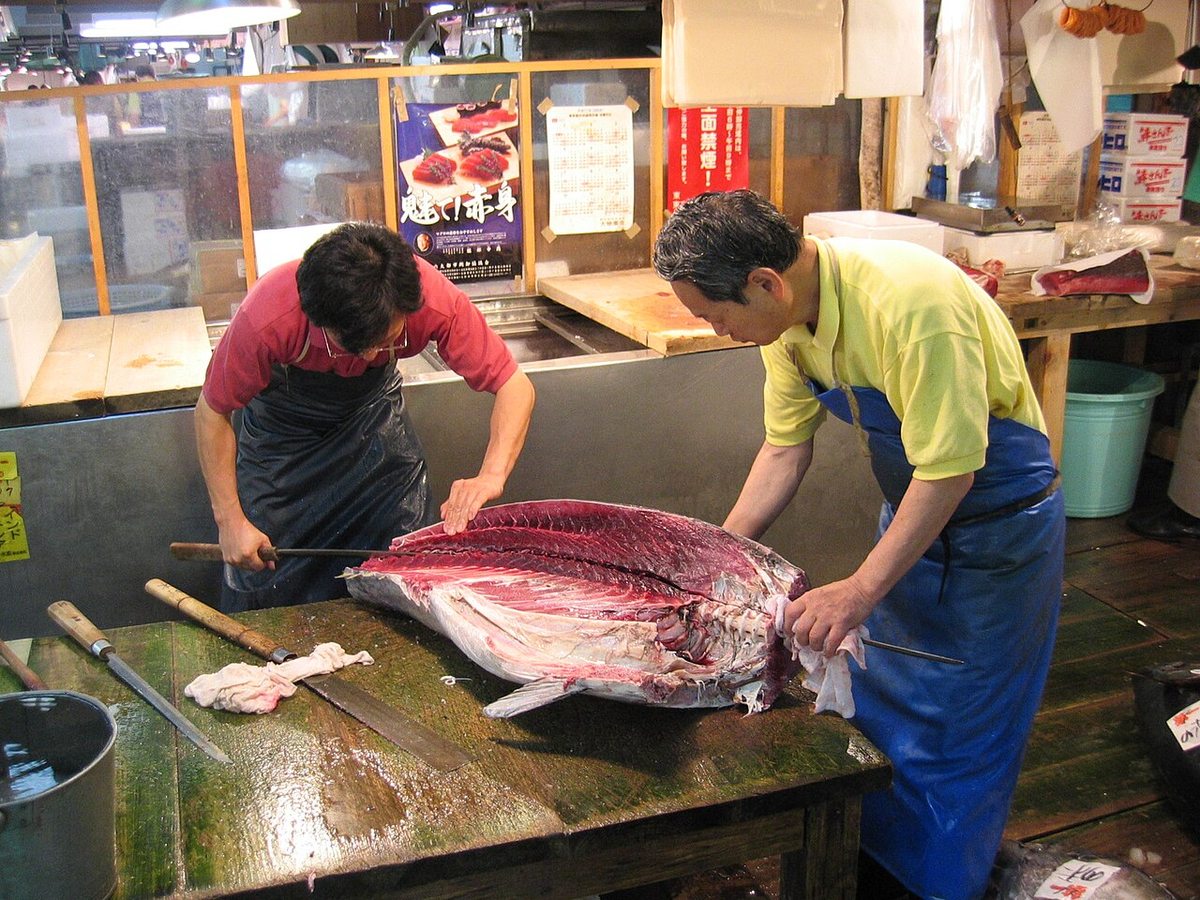
マグロ包丁 (maguro-bōchō) — The maguro bocho (oroshi hocho) is an extremely long knife — blade lengths around 400–600 mm and beyond — used to break down whole tuna at fish markets, sometimes worked by two people.
| Record type | Knife type |
|---|---|
| Origin | Japan (wholesale fish markets) |
| Japanese name | マグロ包丁 (maguro-bōchō); also oroshi hōchō (おろし包丁) |
| Blade profile | Extremely long, flexible blade; some with a second grip point at the tip end |
| Edge | Double bevel or single bevel by maker |
| Typical length | About 400–600 mm blade; the largest exceed 1 m overall |
| Used for | Breaking down whole tuna and other very large fish |
A whole bluefin tuna can outweigh the person cutting it. The maguro bocho's metre-class length lets market cutters section the fish in single passes, and some cuts are made with one person holding the handle and another guiding the tip with a cloth. The type is a market tool, not a kitchen knife; shorter oroshi hocho are made for large fish generally. Toyosu and regional wholesale markets are its home ground.
When the fish is two metres long, the knife has to be to match. The maguro bocho is the largest knife in this guide by a wide margin.
A market tool, worked in pairs
Market cutters section tuna crosswise first, then loin it along the bones. The longest cuts pass through the whole fish in one draw, which is why the blade is so long; for the biggest fish, a second worker steadies the tip end.
Because tuna is valuable, the cuts are planned like joinery — the value of each block depends on where the blade goes. The knife is only one part of that system.
Read alongside
Sources
- Maguro bocho — Wikipedia (English) — The tuna knife and its market use
- Japanese kitchen knife — Wikipedia (English) — Overview of Japanese kitchen knife types, bevels and steels
Record source: Wikipedia (English). Text is original to this guide, written from the cited sources. Wikipedia material is used under CC BY-SA. Official, association and maker pages were used for facts and figures only; no text or photographs were copied from them.