Guide top › Knife types › Kiritsuke — the sword-tipped hybrid
Kiritsuke — the sword-tipped hybrid
切付包丁 (kiritsuke-bōchō) — The kiritsuke combines a yanagiba's length with an usuba-like flat edge and a distinctive reverse-tanto 'sword' tip. Traditionally a single-bevel knife reserved for head chefs; double-bevel kiritsuke-gyuto versions are now common.
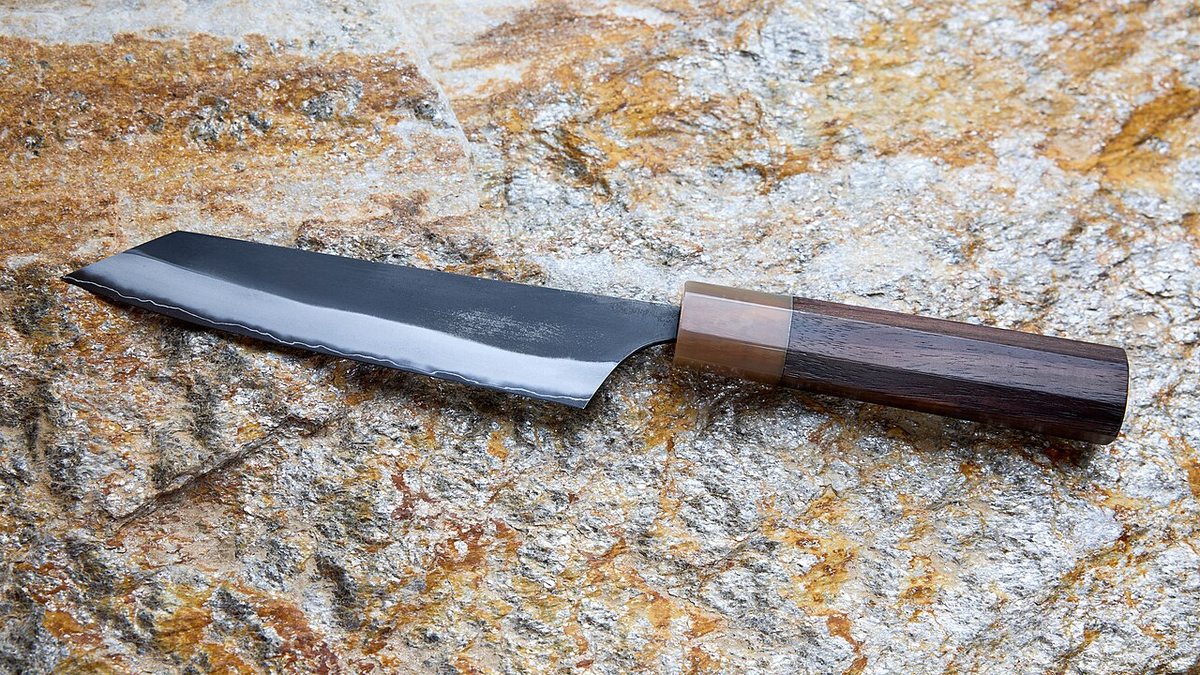
| Record type | Knife type |
|---|---|
| Origin | Japan |
| Japanese name | 切付包丁 (kiritsuke-bōchō) |
| Blade profile | Long flat edge with an angled reverse-tanto tip |
| Edge | Single bevel (traditional); double bevel on modern kiritsuke-gyuto hybrids |
| Typical length | 240–330 mm (single-bevel); 210–240 mm (hybrids) |
| Used for | Combined sashimi and vegetable work; hybrids serve as chef's knives |
A traditional kiritsuke is single-bevel, 240–330 mm, and in classical Japanese kitchens only the head chef (itacho) was permitted to use one — it had to cover both sashimi and vegetable work. The angled tip (k-tip) helps with decorative cuts and detail work. Most kiritsuke sold to home cooks today are double-bevel hybrids on a gyuto profile; this guide treats the single-bevel original and the modern hybrid as the same named family with different edges, and product pages should always state which one is meant.
The kiritsuke is two knives wearing one dramatic tip — and its history as the head chef's privilege still shapes how it is sold.
One knife, two jobs, one owner
Because the kiritsuke had to slice fish like a yanagiba and cut vegetables like an usuba, it demanded the most skill of any kitchen knife. Custom reserved it for the most senior chef in the kitchen.
The flat profile means the kiritsuke does not rock-cut like a gyuto; it suits cooks who push-cut and draw-cut. Modern double-bevel versions keep the look and soften the demands.
Read alongside
Sources
- Japanese kitchen knife — Wikipedia (English) — Overview of Japanese kitchen knife types, bevels and steels
Record source: Wikipedia (English). Text is original to this guide, written from the cited sources. Wikipedia material is used under CC BY-SA. Official, association and maker pages were used for facts and figures only; no text or photographs were copied from them.